
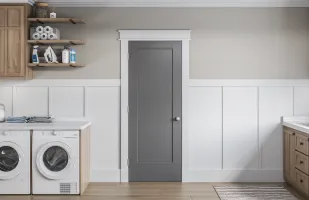
What is a Prehung Door? The "Cheat Code" for a Perfect Installation
Ever tried to hang a new door into an old, crooked frame? It’s a project that can quickly turn into a weekend nightmare.
At DB Building Materials, we get asked all the time: "What exactly is a prehung door, and is it worth the extra cost?"
The short answer? It’s the closest thing to a "cheat code" for home renovation. Here is everything you need to know about why prehung systems are the preferred choice for both pros and homeowners.
1. The Definition: A "Door-in-a-Box" System
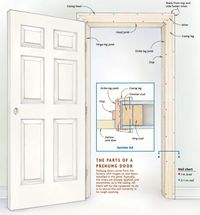
A Prehung door is a complete doorway system. Unlike a "slab" (which is just the door itself), a prehung door arrives with the door already attached to its own frame (the jamb) via pre-installed hinges.
Think of it as a precision-engineered unit. Because the door is fitted to the frame at the factory, you aren't guessing if the gaps will be even—the "reveal" is already perfect.
2. Why Choose Prehung? Savings and Precision
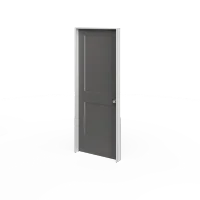
While the sticker price of a prehung door might be higher than a bare slab, it actually saves you money in two ways:
Lower Total Project Cost:
You don’t have to buy a separate frame, hinges, or weatherstripping.
The "Easy Install" Factor:
We recommend prehung units because they are significantly easier to install. By cutting out the complex carpentry, you save hours of labor (or expensive contractor fees).
3. When is Prehung a "Must"?
We always tell our customers that a prehung door is a requirement if your existing door frame is damaged, warped, or out of square.
If the "hole" in your wall isn't perfect, a new slab will never swing right. A prehung unit gives you a fresh, level start.
4. The DIY Reality Check: Avoiding the "Slab Fail"
We’ve seen many DIY projects hit a wall when attempting to install a slab.
The Chisel Challenge:
To hang a slab, you have to "mortise" (chisel out) the hinges into the wood. If you're off by even 1/16th of an inch, the door won't close.
The Case Study:
We recently helped a client who spent a full day trying to chisel hinges into a new slab, only to ruin the wood. They switched to a prehung unit and finished the entire room in under an hour.
5. Getting the "Handing" Right (It’s Permanent!)
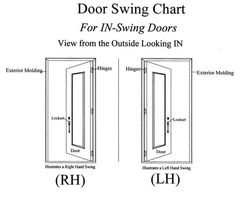
One of the most critical parts of ordering a prehung door is choosing the "swing" (Left-hand vs. Right-hand).
With a slab, you have some flexibility, but with a prehung unit, the frame and door are pre-machined.
If you order the wrong swing, it won't work—a left-hand swing can't simply be flipped without re-machining the entire frame.
6. Pro Tip: The "Rough Opening" and Solid Jambs
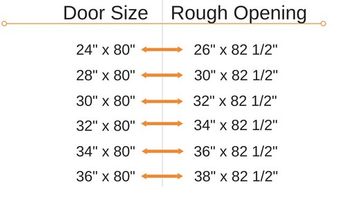
To ensure your new door fits, don't just measure your old door.
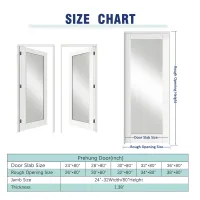
You must measure the Rough Opening—the space between the wall studs.
At our store, we also lean toward Solid-Jamb construction.
While some prefer split-jambs for easy casing, a solid-jamb provides a much higher-end, sturdy feel that stands the test of time.